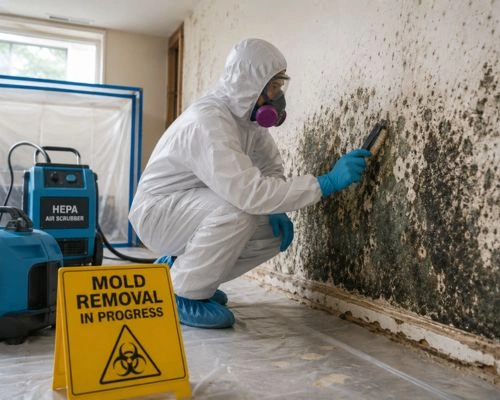
One of the most common problems that we all face as homeowners after water damage, plumbing leaks, or excessive humidity is black mold. Although it begins with only a tiny patch, if not resolved immediately, it can rapidly permeate walls, floors, ceilings, and insulation and flooring. Otherwise, the mold can lead to poor indoor air quality and unhealthful living conditions in your home.
By paying attention to the signs, you can avoid costly repairs and an infestation of mold all over your house. If you observe any of the following signs, it may well be time for professional black mold removal in Dallas, TX, to address the situation before it gets out of control.
An earthy or musty smell is one of the early signs that hidden mold is in your home. Typically, you will smell mold even if mold is not visible because most types are growing behind your walls, under your flooring, or in your air ducts.
If your home still smells damp despite having cleaned and aired the rooms, do not ignore it.
Obvious signs include visible black or dark green spots on walls, ceilings, baseboards, or around windows.
While these so-called spots may appear small at first, mold spreads quickly when moisture stays. It is like trying to cover the stains with paint instead of treating them.
Moisture trapped within building materials typically shows up as brown, yellow, or discolored water stains.
Common places include:
The real problem usually lies under these stained areas, where mold starts to grow if the moisture source is not repaired.
When there is a buildup of extra moisture behind walls, paint will either peel, crack, or bubble.
The wallpaper may also loosen or separate itself from the wall.
But these cosmetic changes are always a sign of moisture problems lurking beneath the surface, still wet and promoting mold activity long before any visible mold appears.
Have you heard family members sneeze more in the house?
Symptoms you experience can be caused by hidden mold in the following ways:
If these symptoms ease after stepping outside your house, then the indoor air in your home could be killing you and mold-affected.
Read More: Mold Remediation vs. Mold Removal: What’s the Difference?
For any home that has suffered flood damage, leaking pipes, overflowing equipment, or roof damage, it faces greater risks for mold growth.
As significant as it might feel — even when surfaces look like they have dried by now- water may still be present:
This avoids mold growth after water damage.
If you’re cleaning mold and it comes back over and over again, the root of the moisture problem has probably not been addressed.
Buying store-bought cleaners typically only eliminates the outer growth layers as sub-surface colonies are still spreading underneath.
If mold keeps coming back, it is a clear sign that you need professional remediation.
Humidity levels exceeding 60% promote growth of mold across the home.
Watch for condensation on:
For homes that do not exchange air well, there generally is a cycle of moisture that allows mold to grow on walls without coming into view.
Soft or warping walls may have soaked in moisture for prolonged periods of time.
The drywall begins to break down and lose its integrity as mold consumes moist building materials.
Disregarding these signals can set you back a pretty penny someday in severe architectural repairs.
If not properly contained, your heating and cooling system can spread mold spores through the entire home.
If you see dark staining around vents, or if you smell a musty odor whenever the HVAC system kicks on, mold might be growing in the ductwork or the building materials close to it.
It is necessary to have a professional inspection, which can help identify the origin of the pest infestation before it spreads further.
A lot of homeowners procrastinate when it comes to mold removal since the size of the visible area looks minimal. However, mold is rarely contained in a single spot.
Black mold removal in Dallas, TX, is a professional service that deals with both the visible mold and underlying moisture source. Mold specialists have special tools to remediate dampness, eliminate moist materials, and dry infested regions, and also prevent any form of advancement down the line.
The cost of repairs is usually much lower if the homeowner contacts us early, which protects the house’s structure and indoor air.
Black mold starts as a small irritant but turns into a serious problem quickly if ignored. Warnings like persistent odors, visible patches of mold on walls or ceilings, peeling paint, repetitive moisture problems, and allergy-like symptoms should not be taken lightly. The good news is that, when dealt with early, mold repair helps prevent structural damage to your home before it gets worse. If you experience these signs, it is best to reach experienced professionals.
Fires & Water Restoration’s expert technicians offer mold inspection, advanced mold remediation, and black mold removal in Dallas, TX, to help you get your home back where it belongs: safe and healthy. Reach out to us today for an inspection and prevent mold from doing bigger damage.

Posted by admin at 28 Sep Roof-Leak Water Damage: How to Find Hidden Moisture and Prevent Interior Damage

Posted by admin at 21 Sep Water Damage Restoration Near Me: Find Fast, Reliable Local Help

Posted by admin at 21 Sep Fire Damage Restoration: What to Do After a House Fire

Posted by admin at 21 Sep How Professional Structural Drying Works After a Flood or Plumbing Leak

Posted by admin at 14 Sep What Can Be Saved After Water Damage—and What Usually Must Be Replaced?









Our mission is simple: restore your property and peace of mind with speed, compassion, and expertise.
© 2026 Fires & Water Restoration All rights reserved. Designed By 
 972-900-3855
  info@firesandwaterrestoration.com

