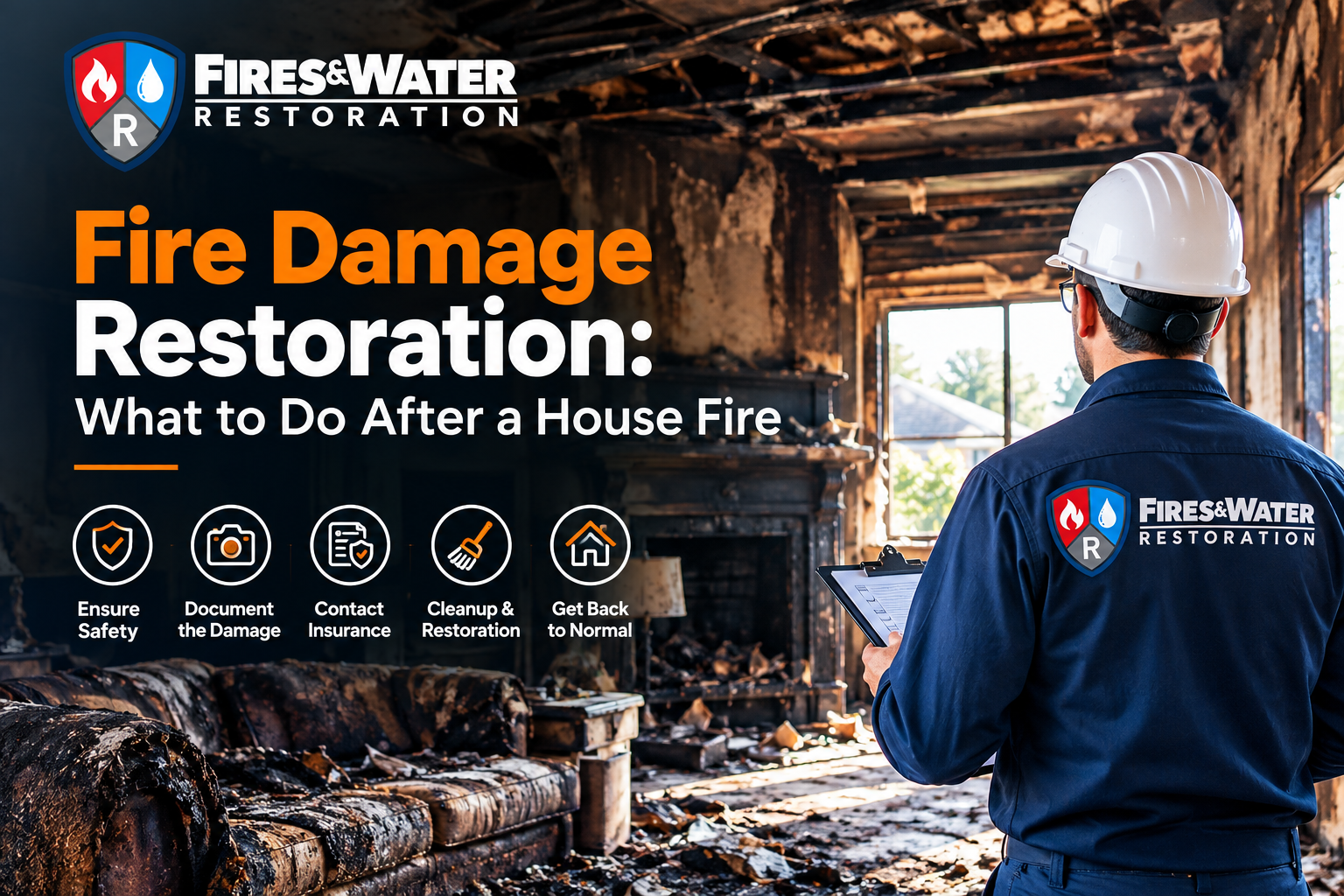
A house fire can leave behind far more than visible burns. Smoke, soot, heat, firefighting water, damaged materials, lingering odors, and structural problems can continue affecting a property after the flames are extinguished. Knowing what to do next can help protect your family, preserve important documentation, and prevent additional property damage.
Fire Damage Restoration is the process of assessing, securing, cleaning, repairing, and restoring areas affected by fire and its secondary damage. The right response begins with safety rather than cleanup. The American Red Cross recommends staying out of a fire-damaged home until authorities determine that it is safe to re-enter.
For homeowners in Dallas, Fort Worth, Arlington, Plano, Frisco, and surrounding communities, professional restoration can also help coordinate the different parts of recovery, including smoke and soot cleanup, water removal, damaged-material assessment, odor control, and restoration.
Quick takeaway: Do not rush into cleaning or repairing a fire-damaged property yourself. First establish that the property is safe, document the damage, contact your insurance provider, and arrange a professional assessment.
The first step after a fire is making sure everyone is safe. Even after firefighters leave, a property may contain hidden hazards. Structural components can be weakened, electrical systems may be damaged, gas lines can be compromised, and floors or ceilings may become unstable. Smoke and soot can also remain inside the property even when the fire itself has been extinguished.
Do not enter the property simply because the flames are gone. Follow instructions from the fire department, local authorities, and qualified professionals before re-entering. The Red Cross specifically advises homeowners to stay out of fire-damaged homes until fire authorities determine that returning is safe.
Immediate safety priorities:
Key point: Fire damage restoration starts with making the property safe enough to inspect—not with immediately removing everything that looks damaged.
A common misconception is that only visibly burned areas require attention. In reality, a house fire can create several layers of damage throughout a property. Heat can affect materials that were never directly touched by flames, while smoke can travel through rooms, wall cavities, HVAC systems, and other connected areas.
Firefighters may also use substantial amounts of water or suppression materials to extinguish the fire. As a result, a property can experience both fire and water damage at the same time. Smoke particles can settle on walls, ceilings, flooring, furniture, appliances, and personal belongings.
The type and extent of damage depend on factors such as the fire’s location, duration, temperature, materials burned, smoke movement, and firefighting response.
Common forms of post-fire damage include:
For properties that also have significant moisture damage, homeowners may need specialized water damage restoration services as part of the recovery process.
Once authorities have determined that the property can be safely accessed, document the condition of the home as thoroughly as possible. Photographs and videos can provide a visual record of damaged rooms, structural components, belongings, appliances, flooring, walls, ceilings, and other property.
The Red Cross recommends photographing damage and keeping receipts for temporary repairs and related expenses.
Avoid throwing away damaged belongings simply because they appear unusable unless your insurance provider or restoration professional advises you to do so. Some items may need to be inspected, documented, or evaluated before disposal.
Create a basic damage record containing:
Practical tip: Take wide photographs first and then close-up photographs. This creates both room-level context and detailed evidence of individual damage.
Good documentation can make communication with your insurance company much easier while also giving restoration professionals a clearer understanding of the property’s condition.
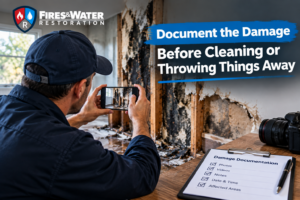
Photographing and documenting fire damage before cleaning or disposing of damaged belongings.880
Smoke and soot can create problems long after a fire has been extinguished. Smoke may move beyond the room where the fire started, while soot can settle on painted surfaces, ceilings, furniture, electronics, fabrics, and other materials.
Cleaning soot is not simply a matter of wiping everything with a household cleaner. Different surfaces can react differently to cleaning products, and aggressive cleaning can sometimes spread or embed residues rather than remove them.
Smoke residue can also contribute to persistent odors. The appropriate restoration method depends on the type of residue, affected material, extent of contamination, and how long the residue has remained on the surface.
Professional fire cleanup may involve:
If smoke has affected a large portion of the property, professional assessment is especially important because visible soot may not represent the full extent of contamination.
After a house fire, homeowners often focus entirely on smoke and burned materials. However, water used during firefighting can create another serious restoration issue.
Wet drywall, flooring, insulation, cabinets, furniture, and other materials may deteriorate when moisture remains trapped for too long. Persistent moisture can also contribute to conditions that support mold growth.
The goal is not simply to remove visible standing water. Restoration professionals need to identify where moisture remains and determine which materials can be dried, cleaned, restored, or replaced.
Important steps may include:
If water damage extends beyond the fire-affected area, a dedicated residential water damage restoration service may be required as part of the overall recovery.
Key point: Fire restoration and water restoration often overlap. Treating one while ignoring the other can leave unresolved damage behind.
Smoke, soot, and ash can affect indoor air quality. The U.S. Environmental Protection Agency notes that smoke and ash can irritate the eyes, nose, throat, and lungs, while cleanup activities can disturb particles and make them airborne.
This is one reason homeowners should avoid treating a heavily contaminated property like an ordinary household cleaning project. Children, older adults, and people with certain heart or lung conditions may be particularly vulnerable to smoke and ash exposure.
During cleanup:
The objective is not simply to make the property look clean. Proper restoration should address the underlying residue and environmental conditions as well as visible damage.
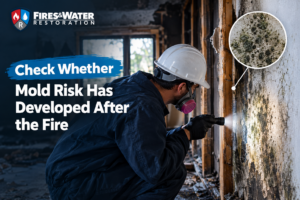
Inspecting a fire-damaged property for mold growth caused by post-fire moisture.
Mold is not caused by fire itself, but post-fire moisture can create conditions that support microbial growth. Water from firefighting, damaged plumbing, roof openings, wet insulation, soaked flooring, and humid indoor conditions can all contribute to prolonged moisture.
The risk becomes more important when wet materials remain undried or hidden moisture is trapped behind surfaces. A property can appear relatively dry while moisture remains inside walls, flooring systems, cabinets, or other materials.
Watch for:
If mold or significant moisture contamination develops, specialized mold damage restoration may become part of the recovery process.
Important distinction: Fire damage restoration, water damage restoration, and mold remediation address different problems, but they can become interconnected after a major residential fire.
Insurance documentation and restoration work should move forward together. Contact your insurance provider as soon as practical and ask about the required documentation, inspection process, temporary living arrangements, and procedures for damaged belongings.
Keep copies of estimates, invoices, photographs, correspondence, receipts, and other relevant records.
A professional restoration company can help assess the property and explain which areas require cleaning, drying, removal, repair, or further inspection. The restoration assessment can also help establish the scope of work.
Useful questions to ask a restoration professional include:
A clear scope of work helps homeowners understand what is being addressed and why.
Professional Fire Damage Restoration is not one single cleaning task. It is a coordinated process that can vary depending on the severity and type of damage.
A typical restoration project may begin with an inspection and damage assessment. The property is then secured as necessary, followed by removal of standing water or damaged materials. Smoke and soot are cleaned from affected surfaces and contents, while specialized methods may be used for odor control.
Depending on the property, restoration may also involve structural repairs, content cleaning, flooring replacement, drywall work, painting, or other reconstruction.
A restoration process may include:
The exact process should be based on the actual condition of the property rather than a standard checklist applied to every fire.
For homeowners specifically looking for fire damage restoration services, an on-site assessment is the best way to determine the appropriate scope of work.
Professional help is appropriate when a fire has affected structural materials, multiple rooms, smoke has spread throughout the property, significant water was used during firefighting, or odors and soot remain after the emergency response.
Even when the visible fire damage appears limited, smoke and water can travel beyond the original fire area. A professional inspection can identify damage that may not be obvious during a quick visual assessment.
This is particularly important when homeowners are unsure whether materials can be cleaned or must be replaced.
Consider professional Fire Damage Restoration when:
The sooner the property can be professionally assessed after it has been declared safe, the sooner the restoration team can determine what needs to be cleaned, dried, removed, repaired, or restored.
Recovering from a house fire can feel overwhelming, so breaking the process into clear steps can make it easier to manage.
Remember: The objective of restoration is not merely to make a burned house look better. It is to address the different types of damage created by fire, smoke, heat, and water and return the property to a safe, functional condition.
A house fire changes the condition of a property in ways that may not always be visible. Burn damage is only one part of the problem. Smoke, soot, water, moisture, odors, damaged materials, and potential structural concerns can all affect the restoration process.
The safest approach is to wait for authorization before re-entering, document the damage carefully, contact your insurance provider, and arrange a professional assessment. From there, restoration can be planned according to the actual condition of the home.
For homeowners in the Dallas–Fort Worth area, professional Fire Damage Restoration can help bring together inspection, smoke and soot cleanup, water removal, odor treatment, contents cleaning, and necessary restoration work.
If your property has recently experienced a fire, focus first on safety and documentation. Once the property has been cleared for access, getting the damage professionally assessed can help you understand the next steps and prevent secondary problems from being overlooked.
Posted by admin at 21 Sep Water Damage Restoration Near Me: Find Fast, Reliable Local Help
Posted by admin at 21 Sep Fire Damage Restoration: What to Do After a House Fire
Posted by admin at 31 Aug How Emergency Water Damage Restoration in Frisco Prevents Costly Home Damage
Posted by admin at 21 Aug What Does a Storm Restoration Company Do? A Complete Homeowner’s Guide
Posted by admin at 17 Aug Top Warning Signs You Need Black Mold Removal in Dallas, TX







Our mission is simple: restore your property and peace of mind with speed, compassion, and expertise.
© 2026 Fires & Water Restoration All rights reserved. Designed By 
 972-900-3855
  info@firesandwaterrestoration.com

