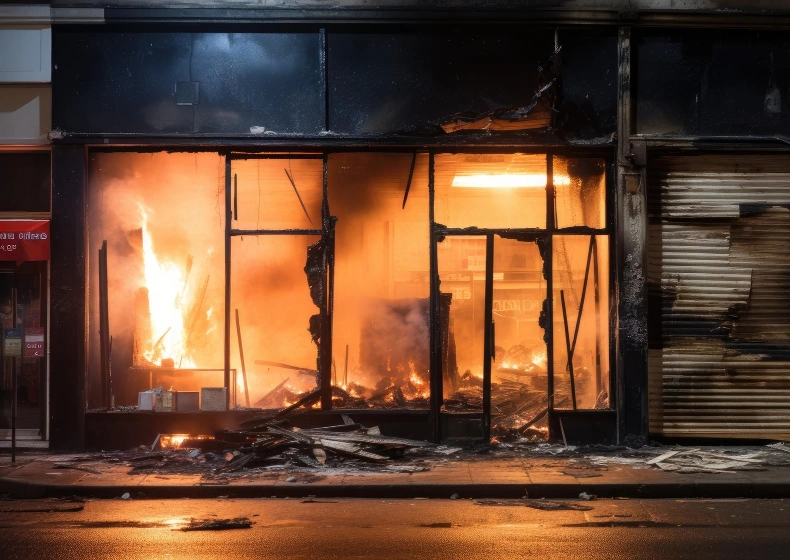
A fire can change a property in minutes. Flames may damage the areas they reach directly, while smoke, soot, heat, and firefighting water can create additional problems throughout the building. Even rooms that were not touched by flames may require professional cleaning, drying, deodorization, or repair.
Fires & Water Restoration provides Dallas fire and water damage restoration for homeowners, property managers, and businesses dealing with the aftermath of a fire. Our team helps stabilize affected properties, address smoke and soot damage, remove water left by firefighting efforts, clean damaged areas, and coordinate the restoration work needed to move the property toward normal use.
When you are dealing with fire damage Dallas property owners need addressed, the first priority is safety. Once the property has been cleared for restoration work, professional assessment can help determine what was damaged, what can be cleaned, and what may need to be repaired or rebuilt.
Fire restoration is rarely limited to the burned area.
A kitchen fire may leave smoke throughout the surrounding rooms. A fire in an electrical panel can affect walls, ceilings, wiring areas, and nearby contents. A larger structure fire may involve multiple rooms, roofing components, insulation, flooring, and building systems.
Smoke can also travel through ventilation pathways and settle on surfaces far from the original fire. Soot may discolor walls and ceilings, leave persistent odors, and continue affecting certain materials if it is not properly addressed.
That is why professional fire damage restoration in Dallas needs to consider the entire property rather than focusing only on what is visibly burned.
Our restoration approach is designed to identify the different types of damage and establish a practical sequence for cleanup, mitigation, repair, and restoration.
After a fire, property owners are often dealing with several problems at once.
Fire and heat damage can weaken or destroy structural and finish materials. The severity depends on the location, duration, temperature, and extent of the fire.
Smoke damage can spread well beyond the burned area. Smoke particles may settle on walls, ceilings, furniture, flooring, and other contents.
Soot contamination can leave stains, residue, and persistent odors. Different types of fires can produce different smoke and soot conditions, so the cleaning approach needs to match the affected materials.
Water damage is another common part of fire recovery. Water used during firefighting can migrate into flooring, drywall, insulation, contents, and other areas. If it is left untreated, additional moisture-related problems can develop.
A complete restoration plan therefore looks at fire, smoke, soot, odor, and water damage together.
Every fire is different, so restoration services are based on the condition of the property. Depending on the situation, our team can assist with several stages of recovery.
The restoration process starts with understanding what happened.
We evaluate visible fire damage along with areas affected by smoke, soot, heat, and water. This helps establish which areas require immediate attention and which restoration steps should come next.
The assessment is especially important for larger Dallas properties where damage may extend across several rooms, floors, or building systems.
Smoke residue can settle on surfaces throughout a property, even where there is little visible fire damage.
We clean affected surfaces and contents using methods appropriate for the materials involved. Walls, ceilings, fixtures, furniture, and other items may require different cleaning techniques.
The goal is to remove residue rather than simply cover the appearance or smell of smoke.
Personal belongings, furniture, equipment, documents, and other contents may be affected by smoke, soot, heat, or water.
Where contents can be restored, they may be cleaned, dried, deodorized, or otherwise treated as part of the recovery process. Severely damaged materials may require removal when restoration is not practical.
Careful contents handling can help property owners determine what can potentially be saved before unnecessary replacement becomes the only option.
Firefighting can introduce significant amounts of water into a property.
Standing water needs to be removed, while moisture trapped in floors, walls, ceilings, and other materials may require professional drying. Air movement and dehumidification can be used where appropriate to help control moisture during the restoration process.
Addressing water damage as part of the fire restoration project helps prevent the recovery process from overlooking problems created after the flames were extinguished.
Smoke odors can remain after visible soot has been removed.
Odor can become trapped in porous materials, furnishings, insulation, and other areas of a property. Effective odor control requires addressing the source of the odor rather than simply masking it with fragrance.
Our team evaluates affected areas and determines the appropriate cleaning and deodorization approach for the property.
Some properties require more than cleaning.
Fire, smoke, heat, and water can damage drywall, ceilings, flooring, cabinetry, framing, insulation, and other components. When materials cannot be restored, repair or reconstruction may be necessary.
Coordinating these stages creates a clearer path from emergency stabilization to a functional, restored property.
Dallas is not one uniform type of property market. Restoration needs can vary significantly depending on where a fire occurs and what type of building is involved.
In North Dallas, restoration projects may involve single-family homes, larger residences, apartments, and established commercial properties. A residential fire may require extensive contents cleaning even when the structural damage is limited.
East Dallas includes many older homes and established neighborhoods where restoration may require careful attention to existing materials and building conditions.
In Downtown Dallas, high-rise offices, apartments, retail spaces, restaurants, and other commercial properties can present different access, ventilation, contents, and operational challenges.
South Dallas includes a mixture of residential, commercial, and community properties, while West Dallas has continued to experience a mix of residential and commercial development.
Regardless of the neighborhood, the restoration process begins with understanding the actual condition of the property rather than assuming every fire requires the same solution.
Fires do not stop at city boundaries, and property owners throughout the Dallas-Fort Worth region may need restoration support after a fire.
Fires & Water Restoration serves Dallas and surrounding communities, including:
This regional coverage is important for property owners who manage multiple locations or operate businesses across the Dallas-Fort Worth area.
For a Dallas property, local knowledge also matters because building types, neighborhood development, access conditions, and property use can influence how restoration work is planned.
One of the most overlooked parts of fire recovery is the relationship between fire and water damage.
A property may look heavily damaged by smoke, but water can be affecting flooring, walls, ceilings, contents, and other materials at the same time. Conversely, a relatively contained fire can still leave substantial smoke residue throughout the building.
This is why Dallas fire and water damage restoration requires a coordinated approach.
Our team can evaluate both types of damage, establish priorities, and work through the restoration process in a logical sequence. Addressing only the visible fire damage can leave other restoration issues unresolved.
A structured process helps keep a complicated restoration project organized.
We evaluate the visible and affected areas to understand the extent of fire, smoke, soot, and water damage.
Where appropriate, affected areas are secured and protected to help prevent additional damage during the restoration process.
Smoke residue and soot are removed from affected surfaces and contents using suitable cleaning methods.
Water introduced during firefighting is addressed, and affected areas are dried where necessary.
Contents and structural surfaces are cleaned, while persistent smoke odors are treated based on the source and affected materials.
Damaged building components are repaired or reconstructed when cleaning alone cannot restore the property.
The completed work is reviewed to identify remaining restoration needs and help the property move toward normal occupancy and use.
After a fire, property owners need more than a quick cleanup. They need a restoration plan that accounts for the condition of the building and the practical needs of the people using it.
Fires & Water Restoration focuses on:
Our mission is to make a difficult situation easier to manage by providing clear communication and a structured restoration process from the initial assessment through recovery.
After a fire, waiting for the visible damage to disappear is not a restoration strategy. Smoke residue, moisture, odors, and damaged materials can continue creating problems after the flames are gone.
If your Dallas home or business has experienced a fire, Fires & Water Restoration can assess the property and help determine the appropriate next steps for cleanup, mitigation, repair, and restoration.
Whether the property has suffered direct fire damage, widespread smoke contamination, firefighting water damage, or a combination of all three, timely professional attention can help you understand the scope of the problem and move forward with recovery.

We follow a structured process for every fire restoration case.
We inspect fire, smoke, and water damage across the Dallas property.
We secure damaged areas to prevent further risks.
We remove contamination from all surfaces and hidden areas.
We restore indoor air quality and remove smoke smell.
We rebuild and restore damaged sections to safe condition.
Each step ensures full recovery and safety in Dallas properties.
TestimonialsReal stories from customers who trusted us to restore their peace of mind.

“They arrived within an hour after our water heater burst. The team was kind, fast, and incredibly thorough.”
Satisfied Client
“After a kitchen fire, they handled everything from cleanup to rebuilding. I couldn’t believe how good the house looked afterward.”
Satisfied Client
“Professional, patient, and honest. They helped us navigate insurance and made the process easy.”
Satisfied Client
FAQsWe provide 24/7 emergency fire response across Dallas and nearby areas.
Yes, we clean smoke, soot, and odor from all affected properties.
Yes, we assist with documentation and claim support.
Yes, we also serve Irving, Arlington, Plano, and Fort Worth.
Stay safe and avoid damaged areas. Call emergency restoration help immediately.
Yes, we operate 24/7 for fire emergencies in Dallas.
Where we offer our servicesFire damage becomes worse over time. Quick action helps reduce loss and repair cost.
If you need fire damage restoration in Dallas, call now for immediate support.
Fires and Water Restoration is available 24/7 across Dallas.







Our mission is simple: restore your property and peace of mind with speed, compassion, and expertise.
© 2026 Fires & Water Restoration All rights reserved. Designed By 
 972-900-3855
  info@firesandwaterrestoration.com

