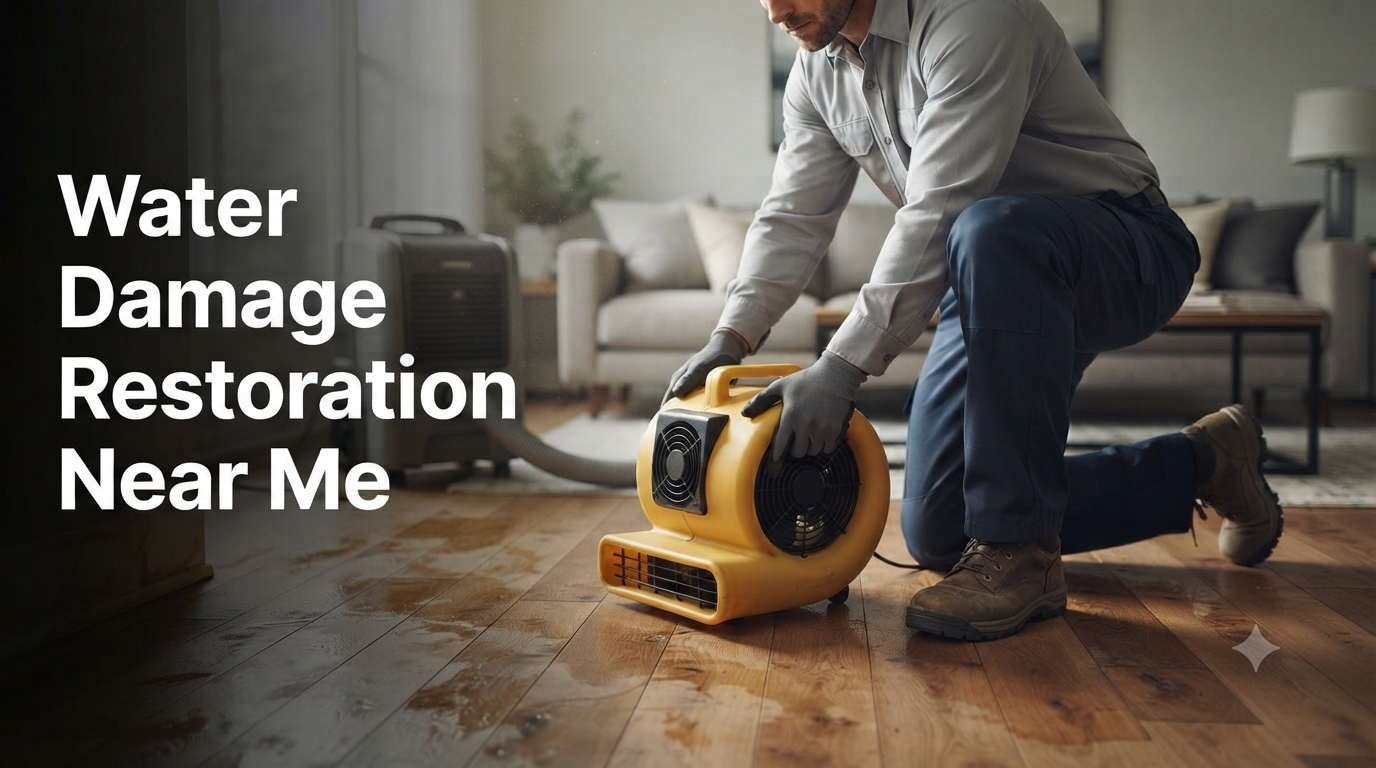
Water damage can quickly become a serious property problem. A burst pipe, leaking water heater, overflowing appliance, plumbing failure, roof leak, storm intrusion, or flooding can introduce moisture into flooring, drywall, cabinets, insulation, ceilings, and other building materials. When property owners search for water damage restoration near me, they are usually looking for more than someone who can remove visible water. They need professional help to identify the source, determine how far the moisture has traveled, remove excess water, dry affected materials, and restore the property.
Water can spread beyond the area where it first becomes visible. Moisture may move underneath flooring, behind walls, inside cabinets, through insulation, or into subfloors. This means a room can appear dry while moisture remains trapped inside building materials.
The Environmental Protection Agency (EPA) recommends drying wet or damp materials within 24–48 hours when possible because prolonged moisture can create conditions that support mold growth. Professional restoration therefore focuses on water removal, moisture control, structural drying, cleaning, documentation, and restoration.
Water damage restoration is the process of assessing and restoring a property following unwanted water intrusion. The appropriate response depends on the source of the water, how long the materials have been exposed, the amount of water involved, and which parts of the property have been affected.
A professional restoration process normally begins with an assessment. The restoration team needs to determine where the water originated, whether the source has been stopped, and which rooms and materials may have been affected.
The ANSI/IICRC S500 Standard for Professional Water Damage Restoration provides industry guidance related to inspection, drying technology, equipment, safety, documentation, and restoration procedures.
Professional restoration may include:
The process should address both visible and concealed moisture. Simply removing puddles does not necessarily mean the property is dry.
Key Takeaway: Water damage restoration is not simply cleanup. It is a structured process designed to identify moisture, control the damage, dry affected materials, and restore the property.
Not every small spill requires professional restoration. However, professional assistance becomes increasingly important when water has spread across a large area, entered structural materials, remained undetected, or originated from a potentially contaminated source.
A leaking pipe behind a wall, for example, can introduce moisture into drywall and insulation without creating obvious surface damage. Water beneath flooring can also remain trapped after the visible surface appears dry.
You may need water damage restoration near me after:
The amount of visible water is only one part of the assessment. The source, duration, affected materials, and path of moisture are also important.
Key Takeaway: If water has entered walls, flooring, ceilings, cabinets, insulation, or other difficult-to-access areas, professional assessment can help identify damage that may not be visible.
Water can move through porous materials quickly. Once absorbed, moisture can remain inside materials even after standing water has been removed.
The EPA emphasizes moisture control as an important part of mold prevention and recommends drying wet or damp materials within 24–48 hours when possible. This makes the early response especially important.
Fast restoration can help:
Professional restoration teams may use extraction equipment, air movers, dehumidifiers, and moisture meters to manage the drying process.
However, fast response should not mean incomplete restoration. A floor that feels dry does not necessarily indicate that the subfloor or surrounding materials are also dry.
Key Takeaway: The objective of rapid water removal is not merely to make the property look dry. It is to remove excess water, locate remaining moisture, establish drying conditions, and monitor affected materials.
When searching for water damage restoration services near me, property owners may find companies offering different levels of service. Some focus mainly on emergency extraction, while others provide a complete restoration process.
A comprehensive restoration response generally includes several stages.
The property is evaluated to understand the source, extent, and immediate risks associated with the water damage.
Standing water is removed using appropriate extraction equipment.
Affected areas are checked for moisture, including locations where water may have traveled beyond visible damage.
Air movement and dehumidification may be used to support controlled drying.
Affected surfaces and recoverable contents may require cleaning based on the source and condition of the water.
Materials that cannot reasonably be restored may require controlled removal.
Repairs or reconstruction may be required after the affected areas have been appropriately dried and addressed.
Key Takeaway: When comparing water damage restoration services near me, look for a provider that can manage the complete restoration process instead of only removing visible water.
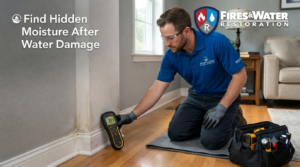
Professional moisture inspection can identify water damage that is not visible on the surface.
One of the biggest challenges following water intrusion is that visible damage does not always represent the complete problem.
Moisture can travel beneath flooring, behind drywall, underneath cabinets, through insulation, and into structural materials. It can also move away from the original source before becoming visible.
Professional restoration teams may use moisture meters and other inspection methods to evaluate affected materials and determine where additional drying may be necessary.
Hidden moisture may occur in:
Identifying hidden moisture is important because drying only the visible surface can leave moisture trapped underneath.
Key Takeaway: The important question is not only where water is visible, but also where moisture has traveled and what materials have absorbed it.
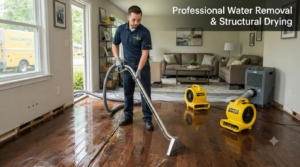
Water extraction and structural drying help control moisture after water damage.
Removing standing water is only the beginning of the drying process. Porous materials can absorb and retain moisture after extraction.
Professional drying generally combines water extraction, air movement, humidity control, moisture measurement, and monitoring. Air movers can increase evaporation from affected surfaces, while dehumidifiers help remove moisture from the surrounding air.
A controlled drying process may involve:
The ANSI/IICRC S500 framework addresses inspection, psychrometry, drying technology, equipment, and structural restoration within professional water damage restoration.
Key Takeaway: Effective drying is a measured and monitored process, not simply placing a household fan in a wet room and waiting for the area to appear dry.
Water damage does not automatically mean mold will develop. However, prolonged moisture can create conditions that support mold growth.
The EPA identifies moisture control as a central component of mold prevention and recommends drying wet or damp materials within 24–48 hours when possible.
This is especially important for porous materials that can absorb and retain water.
Materials that may retain moisture include:
A persistent musty odor, visible mold growth, or recurring moisture should be investigated rather than simply covered with fragrance or deodorizer.
Water restoration and mold remediation are related but different processes. The first priority after water damage is to stop the source and control moisture. If mold has already developed, additional mold damage restoration may be necessary.
Key Takeaway: Controlling moisture quickly is one of the most important steps in reducing conditions that can contribute to secondary mold growth.
Finding a restoration company close to your property can be useful during an emergency, but proximity should not be the only consideration.
A professional provider should be able to explain how it will inspect the property, remove water, identify hidden moisture, establish drying conditions, and monitor progress.
Before choosing a provider, ask:
Also consider the company’s service area, emergency availability, experience, reviews, equipment, documentation, communication, and range of restoration services.
Key Takeaway: A reliable restoration provider should be able to clearly explain what happened, what areas are affected, how they will be dried, and what restoration steps will follow.
Safety should come before cleanup. If standing water is near electrical systems, structural damage is suspected, or the water may be contaminated, avoid entering the affected area unnecessarily.
If it can be done safely, stop the water source. An accessible plumbing shutoff may be used when appropriate.
Property owners should also document the condition of the property before extensive cleanup begins.
Useful steps include:
Potentially contaminated water should be handled carefully, and professional assistance may be appropriate for sewage-related or otherwise hazardous water.
Key Takeaway: Before professional help arrives, focus on safety, stopping additional water intrusion when possible, protecting unaffected property, and documenting the damage.
Insurance coverage depends on the individual policy, cause of the loss, exclusions, deductibles, and specific circumstances. A sudden plumbing failure, long-term seepage, storm-related intrusion, and flooding may be treated differently.
Property owners should therefore avoid assuming that every water-related expense will automatically be covered.
Useful documentation includes:
A restoration company may provide photographs, moisture documentation, estimates, and other records, but the insurance carrier determines coverage according to the applicable policy.
Key Takeaway: Good documentation creates a clear record of the incident and restoration work. If you intend to make an insurance claim, contact your insurer promptly and follow its documentation requirements.
The reason people search for water damage restoration near me is often straightforward: water emergencies require timely attention.
A local restoration provider may be able to respond quickly, inspect the property, deliver drying equipment, monitor progress, and coordinate subsequent restoration work.
Local availability can be particularly useful following storms, plumbing failures, roof leaks, flooding, and other events where delays may allow moisture to spread.
However, proximity should be evaluated alongside professional capability.
Compare providers based on:
Key Takeaway: The goal is to find a restoration provider that combines local availability with appropriate equipment, experience, inspection practices, drying capabilities, and communication.
The first few hours following water intrusion can influence how difficult restoration becomes. Several common mistakes can allow moisture to remain or create additional problems.
One common mistake is assuming that visible water removal means the property is completely dry. Moisture can remain underneath flooring, inside walls, beneath cabinets, or within insulation.
Another mistake is delaying action because the affected area appears relatively small.
Avoid these common mistakes:
The correct restoration response depends on the water source, contamination level, affected materials, and duration of exposure.
Key Takeaway: Water damage should be treated as a moisture and property-restoration problem, not simply a cosmetic issue.
Water emergencies can happen at any time. A pipe can fail overnight, an appliance can leak while a property is empty, or severe weather can introduce water through a damaged roof.
The initial priority should be safety and stopping additional water intrusion when possible. Once the immediate situation is controlled, the property can be assessed to determine how far moisture has traveled.
A typical restoration sequence includes:
Determine where the water originated.
Address the source when it is safe to do so.
Determine which rooms and materials are affected.
Remove accumulated water.
Assess areas beyond visible damage.
Use appropriate air movement and humidity control.
Reassess affected materials throughout the process.
Address surfaces and recoverable contents.
Complete necessary repairs or reconstruction.
Key Takeaway: A structured response helps ensure that restoration addresses the source, water removal, hidden moisture, drying, cleaning, and final restoration.
When water damage affects a home or business, choosing a restoration company that can evaluate the property and manage the appropriate restoration steps is important. Fires & Water Restoration provides water damage restoration services for property owners dealing with plumbing leaks, flooding, storm-related water intrusion, and other water emergencies.
The company’s services are designed to address the different stages of water damage, including water removal, moisture assessment, drying, cleanup, and restoration support. This is particularly important because water damage may extend beyond the areas that are immediately visible.
Water can move into flooring, drywall, cabinets, insulation, subfloors, and other building materials. A professional assessment helps determine which areas require attention and whether additional drying or restoration is necessary.
Depending on the circumstances, services may include:
The appropriate service depends on the source and severity of the water damage. A localized plumbing leak may require a different response from extensive flooding or water that has remained inside structural materials.
Key Takeaway: Fires & Water Restoration provides property owners with professional support for water assessment, extraction, drying, cleanup, and restoration needs.
For property owners searching for water damage restoration near me, the goal should be to find a provider capable of addressing the actual condition of the property rather than simply removing visible water.
Fires & Water Restoration can help property owners navigate the restoration process by assessing affected areas and addressing the appropriate water removal and drying requirements.
Professional restoration can be particularly useful when:
The focus should remain on identifying the extent of the damage, controlling moisture, and restoring affected areas properly.
Key Takeaway: Fires & Water Restoration can be a practical local resource for property owners who need professional water damage assessment, extraction, drying, cleanup, and restoration support.
If water damage has just occurred, begin with safety. Stop the source if it can be done safely, stay away from electrical hazards and potentially contaminated water, and document the visible condition of the property.
Once the immediate situation is under control, professional assessment can help determine whether moisture has entered areas that are not visible.
For significant water damage, Fires & Water Restoration can assess the affected property and help determine the appropriate restoration steps.
A practical response is:
This process helps ensure that important stages are not overlooked.
Searching for water damage restoration near me is often the first step after a leak, flood, plumbing failure, appliance failure, or storm-related water intrusion.
The most important consideration is not simply how quickly visible water can be removed. Effective restoration should determine where the water came from, how far it traveled, which materials were affected, whether hidden moisture remains, and what drying and restoration work is required.
Professional restoration may involve water extraction, moisture inspection, structural drying, dehumidification, cleaning, monitoring, documentation, and repairs.
If you are searching for water damage restoration services near me, Fires & Water Restoration provides professional assistance for residential and commercial water damage situations. Its restoration services can help property owners address water removal, moisture concerns, drying, cleanup, and restoration following an unexpected water event.
The objective is straightforward: control the water, identify the moisture, dry the affected property, and restore the damaged areas properly.
When water damage extends beyond a small, safely manageable incident, professional assistance can provide a structured approach to restoring the property and addressing moisture before it develops into a larger problem.
Posted by admin at 21 Sep Water Damage Restoration Near Me: Find Fast, Reliable Local Help
Posted by admin at 21 Sep Fire Damage Restoration: What to Do After a House Fire
Posted by admin at 31 Aug How Emergency Water Damage Restoration in Frisco Prevents Costly Home Damage
Posted by admin at 21 Aug What Does a Storm Restoration Company Do? A Complete Homeowner’s Guide
Posted by admin at 17 Aug Top Warning Signs You Need Black Mold Removal in Dallas, TX







Our mission is simple: restore your property and peace of mind with speed, compassion, and expertise.
© 2026 Fires & Water Restoration All rights reserved. Designed By 
 972-900-3855
  info@firesandwaterrestoration.com

