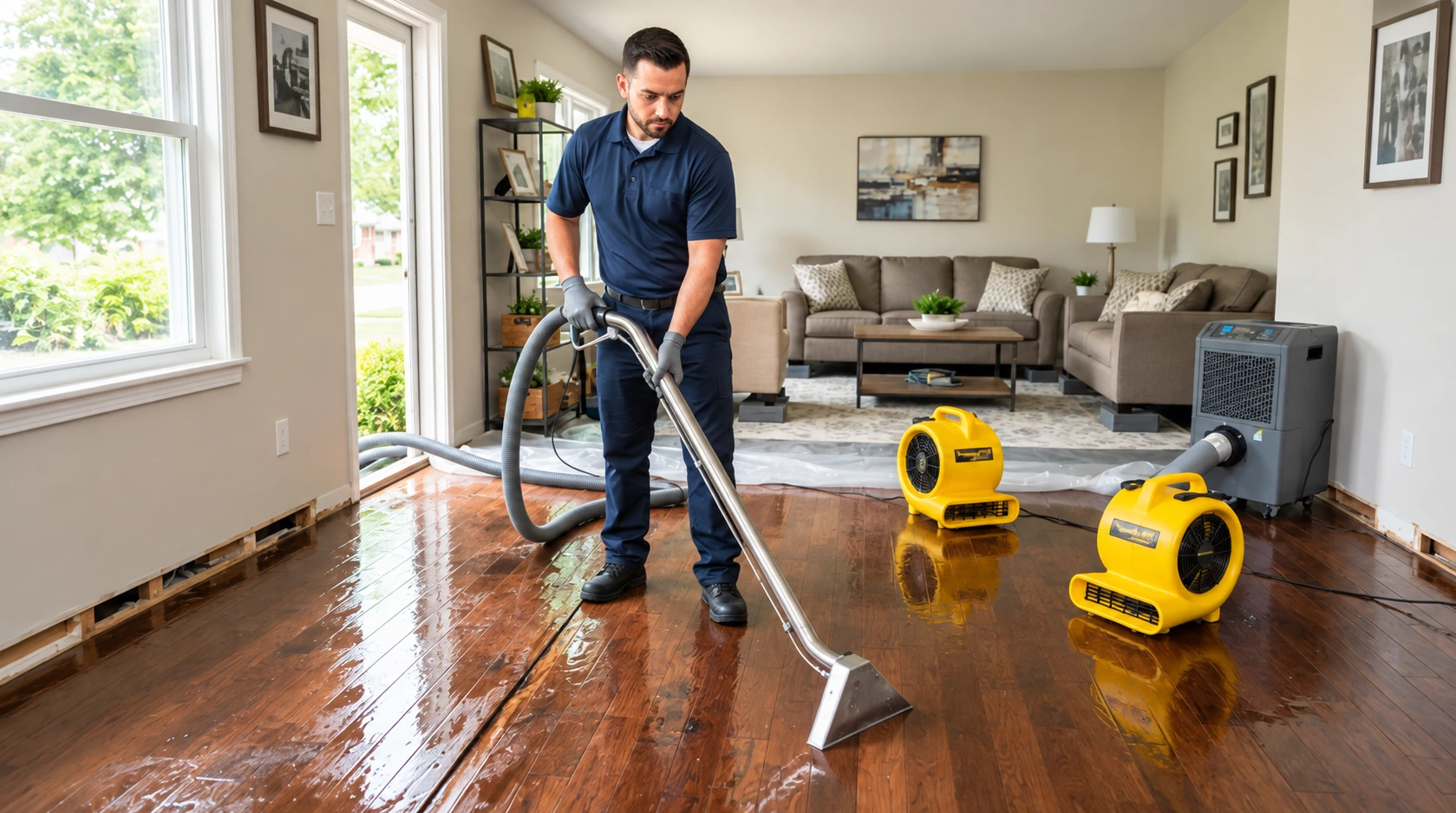
Even after water has been removed, a flood or plumbing leak can cause a significant problem. Drywall, flooring, wood, insulation, and other building materials can absorb moisture.
It is possible for surfaces to be dry, but for moisture to be present in the substructure. Structural drying, performed by professionals, is vital in helping to remove this moisture and minimize the risk of mold, odors, and material damage.
The first step is a thorough inspection. Water damage is detected by restoration professionals.
Water has the ability to migrate behind walls, under floors, into cabinets, and into wooden framing. Technicians test for moisture and other issues with moisture meters and other tools to pinpoint areas that require attention.
This evaluation will guide the development of a proper drying program.
Before structural drying can be effective, any standing water must be removed.
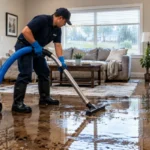
Pumps, wet vacuums, and extraction equipment may be used to extract water from affected areas by professionals.
Rapid water removal can minimise the moisture uptake of building materials and prevent further damage.
Once the water has been removed, water damage technicians strategically move in water damage drying equipment in the affected area.
Air movers help to propel air across wet surfaces, which evaporates moisture. Water vapor is then drawn out of the air through the use of a dehumidifier.
Equipment positioning is related to the size of the affected area, materials involved, temperature, humidity, and moisture levels.
When moisture is present in the building material, it’s not merely air movement that is needed.
Dehumidification after water damage removes excess water vapour from the indoor air. Dehumidifiers will remove moisture from wet materials, helping to keep the air drier.
This helps to facilitate the drying process and reduce excess moisture in the house.
The most crucial step in professional drying is to monitor moisture levels during the drying process.
A wall or floor may look dry on the surface, but have moisture below. Using moisture monitoring can help the technician assess the moisture condition of affected materials, not just by their appearance.
Technicians take readings at various stages and make the appropriate adjustments to equipment as needed. Drying continues until the desired moisture levels are reached.
So, how much time does it take to dry the structure?
It depends on the amount of damage that has occurred. Factors include the volume of water that entered the house, length of exposure, type of materials that were affected, air moisture, ventilation, and hidden moisture volume.
Sometimes, a couple of days of controlled drying is necessary, and in other instances, water damage can take more time. Regular moisture checks are used to ascertain that the affected materials are dry enough.
Surface moisture may be removed by household fans, but they won’t always get to water caught in walls, floors, or other materials.
Specialized restoration equipment and techniques are used by professional restoration companies to deal with both surface and hidden moisture.
Extensive drying can minimize the potential for secondary issues like musty smells, deterioration of materials, and mold growth.
After drying, technicians re-inspect the areas. They assess what can be cleaned or restored and what needs to be replaced.
Some of the other work that may be needed will be further drywall repair, flooring restoration, cleaning, and other reconstruction services depending on the damage.
Drying right allows restoration work to proceed on a dry and stable foundation.
When you have water damage or any plumbing leak, the first step is to remove any visible water. Walls, floors, ceilings, and other materials can harbor moisture.
Professional structural drying techniques utilize extraction, airflow, dehumidification, and moisture monitoring to combat this concealed moisture. A comprehensive strategy can help safeguard and aid in a safer restoration process.
Water damage should not be taken lightly. Fires & Water Restoration provides prompt professional water damage restoration services that can be invaluable in saving your property after floods, leaks, or water emergencies. Book our services today.

Posted by admin at 28 Sep Roof-Leak Water Damage: How to Find Hidden Moisture and Prevent Interior Damage
Posted by admin at 21 Sep Water Damage Restoration Near Me: Find Fast, Reliable Local Help
Posted by admin at 21 Sep Fire Damage Restoration: What to Do After a House Fire
Posted by admin at 21 Sep How Professional Structural Drying Works After a Flood or Plumbing Leak
Posted by admin at 14 Sep What Can Be Saved After Water Damage—and What Usually Must Be Replaced?








Our mission is simple: restore your property and peace of mind with speed, compassion, and expertise.
© 2026 Fires & Water Restoration All rights reserved. Designed By 
 972-900-3855
  info@firesandwaterrestoration.com

