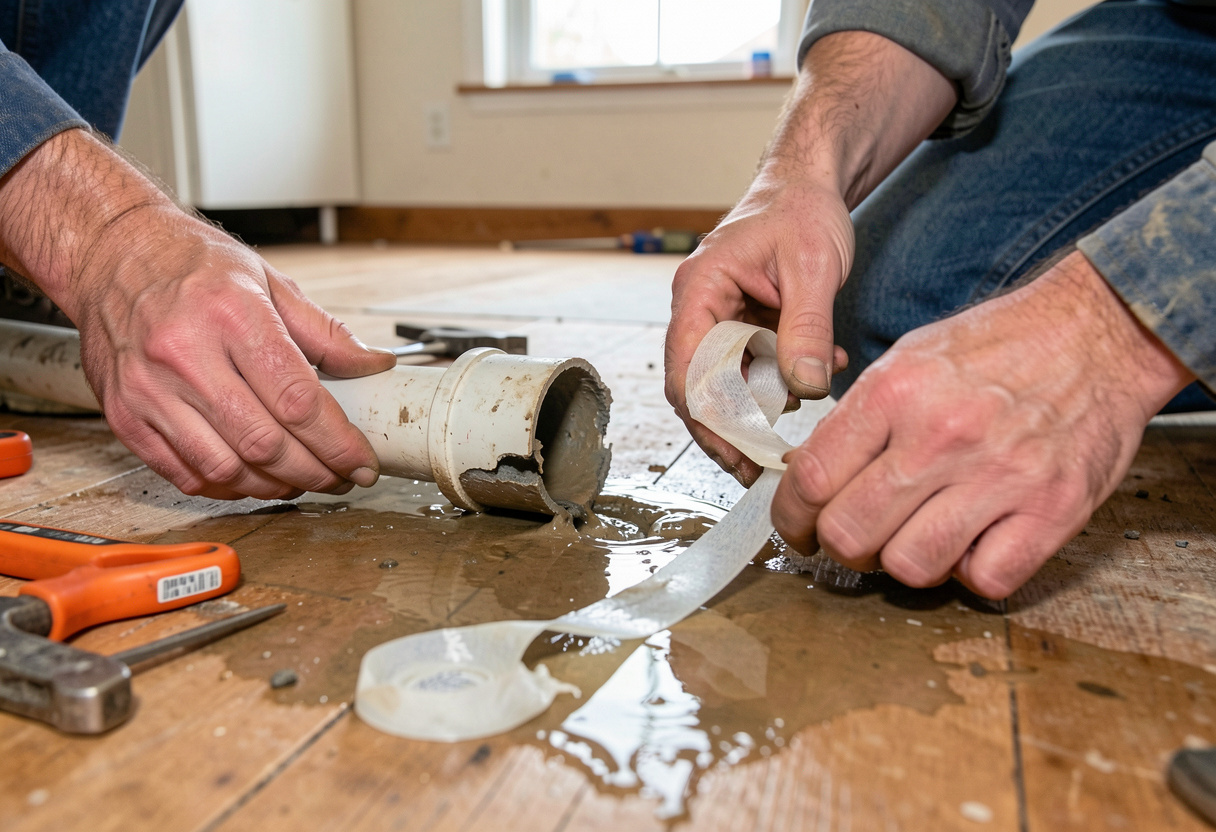
If you live in North Texas long enough, you probably know someone who has dealt with a water pipe burst. Maybe it was you, waking up to a soggy carpet after a sudden freeze. Or maybe a neighbour had their driveway flooded while everyone else was still asleep. In DFW, these plumbing problems are not just bad luck. They are tied closely to how our weather behaves and how our homes are built.
DFW winters are unpredictable. One week it feels like spring, and the next week temperatures drop below freezing overnight. That fast swing is a big reason a water pipe burst happens so often here.
Pipes expand and contract as temperatures change. When cold air hits quickly, the water inside pipes can freeze before the pipe material has time to adjust. Ice expands, pressure builds, and something has to give. That is usually the pipe wall. Older pipes are especially vulnerable, but even newer homes are not immune.
Early spring does not help much either. Freezing nights followed by warm afternoons keep pipes under constant stress. A water pipe burst might start during a cold snap but not fully reveal itself until temperatures rise and water flows again.
Most homes in DFW sit on slab foundations. That design works well for our soil and climate, but it also means many water lines run through walls or under concrete. When a water pipe burst occurs under a slab, it can go unnoticed for a while.
Unlike homes with basements, there is less buffer space to protect pipes from temperature changes. Exterior walls often hold plumbing lines, especially in bathrooms and kitchens. When cold air slips in through small gaps, pipes inside those walls are exposed.
A Broken Pipe under a slab can be expensive and stressful. Homeowners often notice signs like warm spots on the floor, low water pressure, or an unexplained jump in the water bill long after the damage has started.
Another factor people overlook is the soil. DFW sits on expansive clay soil that shifts as it absorbs and releases moisture. During winter freezes and early spring rains, the ground moves more than you might expect.
That movement puts pressure on underground pipes. Over time, joints weaken and small cracks form. Then a hard freeze hits, water expands, and a water pipe burst becomes almost inevitable.
This is why some homeowners experience repeated issues in the same area of the yard or house. The soil movement never really stops; it just changes pace with the seasons.
Some of the most common causes of a water pipe burst come from areas homeowners do not think about until it is too late.
Here are a few examples that show up again and again in DFW homes:
These small oversights can turn into a Broken Pipe quickly during a hard freeze. The damage often shows up when temperatures rise, and water pressure returns to normal.
Also Read: When Do You Need Water Damage Mitigation Services? A Homeowner’s Guide
Many people relax once winter officially ends. That is understandable, but early spring in DFW can still be dangerous for plumbing. Late freezes are common, especially in March.
Pipes that were already weakened during winter may finally fail during this period. A water pipe burst in early spring often surprises homeowners because the weather feels mild during the day.
Rainy conditions add another layer of stress. Saturated soil shifts more, putting extra pressure on underground lines. That combination of lingering cold and ground movement is hard on plumbing systems.
Catching problems early can make a big difference. Slow leaks, strange noises in the walls, or inconsistent water pressure are often early signs of trouble. Ignoring them increases the risk of a full water pipe burst later on.
A Broken Pipe does not always announce itself loudly. Sometimes it shows up as a faint musty smell or a small crack in the drywall. By the time water is visible, repairs are usually more involved.
DFW winters and early springs are tough on plumbing because everything works against the pipes at once. Rapid temperature swings, shifting soil, slab foundations, and simple household habits all play a role. When those factors line up, a water pipe burst becomes far more likely.
If you suspect a Broken Pipe or want peace of mind before the next cold snap, having a professional take a look can help you stay ahead of costly damage. A quick check today can prevent a much bigger headache tomorrow.
Posted by admin at 24 Jun Smoke Damage After a Fire: Why It’s More Dangerous Than Most Homeowners Realize

Posted by admin at 18 Jun Water Mitigation vs Water Restoration: What’s the Difference and Why It Matters
Posted by admin at 20 May The First 48 Hours: A Homeowner’s Checklist for Emergency Flood Cleanup Services
Posted by admin at 10 May Hidden Signs of Water Damage Behind Your Walls (And How to Spot Them)

Posted by admin at 27 Apr Water Damage Restoration: What Homeowners Should Do in the First 24 Hours









Our mission is simple: restore your property and peace of mind with speed, compassion, and expertise.
© 2026 Fires & Water Restoration All rights reserved. Designed By 
 972-900-3855
  info@firesandwaterrestoration.com

