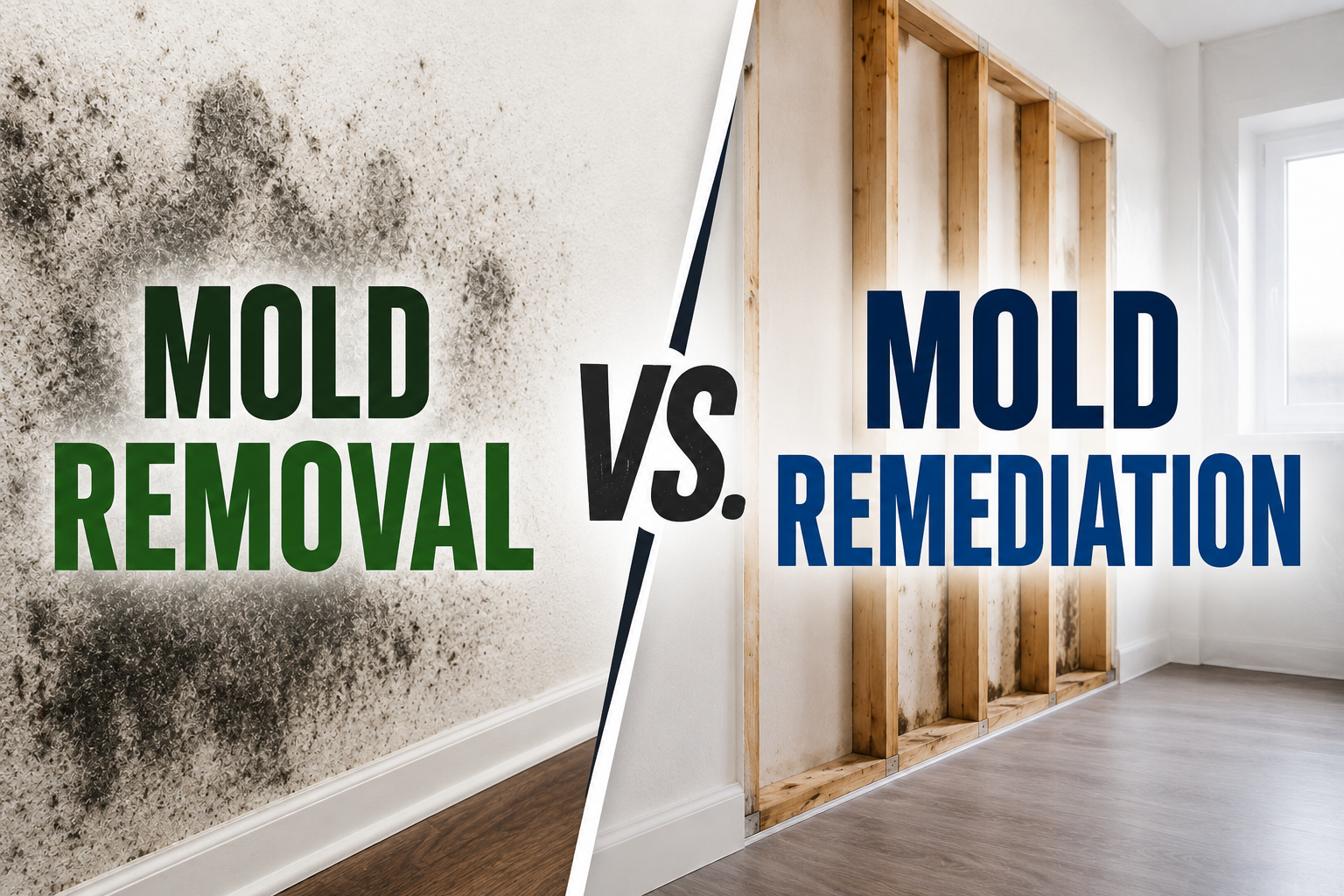
One of the most common issues that homeowners encounter after water damage, plumbing leaks, or high humidity is mold. In addition to causing stains and odors, mold can spread rapidly and cause damage to walls, ceilings, floors, and furniture. Many people seek professional assistance right away when they detect mold growth because of this.
However, you’ll often come across two different terms—mold removal and mold remediation. They may sound alike, but they’re not quite the same. Knowing the difference can help you select the right service for your property and ensure that the mold doesn’t return.
When considering mold remediation in Arlington, TX, here are some things you should know.
Mold removal is the act of actually removing the visible mold from surfaces. This could include the use of special products and equipment for removing mold from walls, ceilings, furniture, or other materials.
Although the process of mold removal will make your home look better, it does not necessarily address the root cause of the mold. Mold spores are found in the air and will re-enter if moisture is still present.
In many instances, removing mold is just a component of a much bigger restoration job.
The mold remediation process is designed to control mold growth and make the indoor environment healthier. Mold remediation involves more than just cleaning visible mold; it also helps to determine the source of moisture, remove contaminated materials if needed, clean affected areas, and prevent future mold growth.
A professional remediation process will typically involve:
That’s why many property owners opt for mold remediation in Arlington, TX, after water damage or flooding.
While both services are related to mold, they are for different purposes.
| Mold Removal | Mold Remediation |
|---|---|
| Clears up visible mold | Clears up all mold issues |
| Includes surface-level mold removal | Finds and treats the source of the issue |
| May not stop the recurrence of mold | Reduces the possibility of further mold growth |
| Limited scope | Through inspection, removal, and restoration |
| Ideal for minor mold issues | Ideal for extensive or recurring mold issues |
Mold remediation that does not address moisture issues can also lead to recurring mold issues and further repair costs down the road.
If minor mold growth occurs on non-porous surfaces, they can sometimes be safely cleaned. If, however, the following situations occur, professional help is recommended:
Professionals use special tools to locate water, to contain mold spores safely, and to dry the affected areas. This will help to minimize the risk of mold spreading around your home while you’re cleaning up.
Hiring mold removal professionals with years of expertise guarantees safe, efficient, and industry-standard mold remediation in Arlington, TX.
Read More: Water Mitigation vs Water Restoration: What’s the Difference and Why It Matters
Mold can start to grow in 24-48 hours after water damage. The longer the water stays on, the more likely the structure will be damaged, and costly repairs will have to be made.
There are several advantages to early intervention:
This also reduces the disruption and the time it takes to get your home back to normal.
While the terms are sometimes used interchangeably, mold removal and mold remediation are two distinct processes. The difference between mold removal and remediation is that remediation addresses the entire issue by removing moisture sources, cleaning moldy surfaces, and preventing mold regrowth. When you have water damage or frequent mold problems, hiring a professional for mold remediation in Arlington, TX, is a more effective, long-term solution to safeguarding your home and your family’s health.
Prevent mold from damaging your home and affecting your indoor air quality. At Fires & Water Restoration, our team of experts offers professional, prompt, and dependable mold removal services that will get rid of the mold and restore your property safely. If you have experienced recent water damage or have an existing mold problem, give us a call for a comprehensive inspection and reassuring restoration solutions.
Posted by admin at 21 Jul Why Professional Storm Damage Restoration Is Better Than DIY Repairs
Posted by admin at 14 Jul What Happens During the First 24 Hours After Water Damage?
Posted by admin at 07 Jul Mold Remediation vs. Mold Removal: What’s the Difference?
Posted by admin at 24 Jun Smoke Damage After a Fire: Why It’s More Dangerous Than Most Homeowners Realize

Posted by admin at 18 Jun Water Mitigation vs Water Restoration: What’s the Difference and Why It Matters








Our mission is simple: restore your property and peace of mind with speed, compassion, and expertise.
© 2026 Fires & Water Restoration All rights reserved. Designed By 
 972-900-3855
  info@firesandwaterrestoration.com

